
 Italiano
 Deutsch
 Français
 Español
 Русский
 Magyar
 Čeština
 Polski
 Ελληνικά
 Slovenčina
 Български
 Türkçe
 Nederlands
Iron Stop Technology. Iron stops here.
Iron is one of the trickiest parameters in car-wash wastewater discharge: the biological treatment plant cannot digest it and lets it through all the way to the inspection manhole. Iron Stop captures it the moment it is released and makes it precipitate into the sludge.
Video chapters
01 · What the law says
One inspection. One value out of limits: iron.
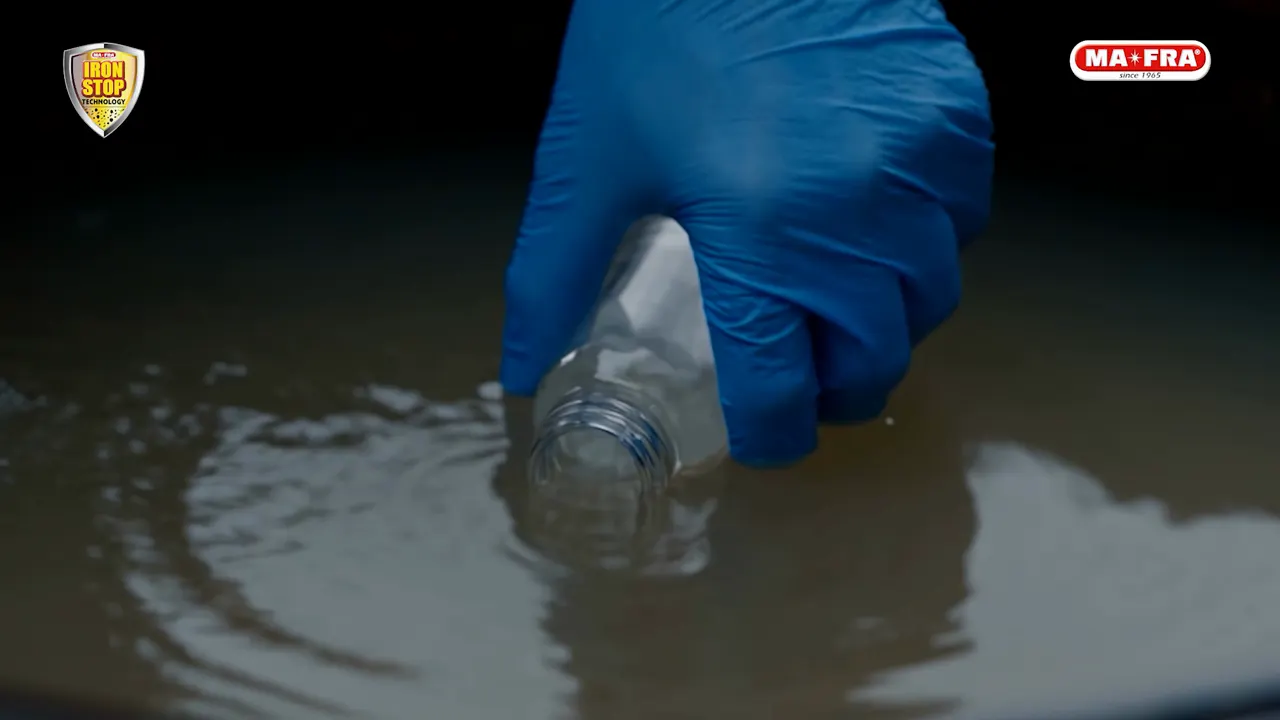
A car wash with self-service wash bays. An inspection, routine or unannounced: the wastewater analysis finds an iron value above the permitted limit.
In Italy, car-wash wastewater is classified as industrial wastewater discharge and is regulated by Italian Legislative Decree 152/2006. Exceeding the limit values can lead to penalties which, in the most serious cases, reach up to 2 years' arrest and a €30,000 fine.
- 01Penalties
- 02Permit suspended or revoked
- 03Business shut down
But where does the iron come from? And why can't the treatment plant retain it?
02 · Where the iron comes from
One main source, two secondary ones. It all ends up in the tank.
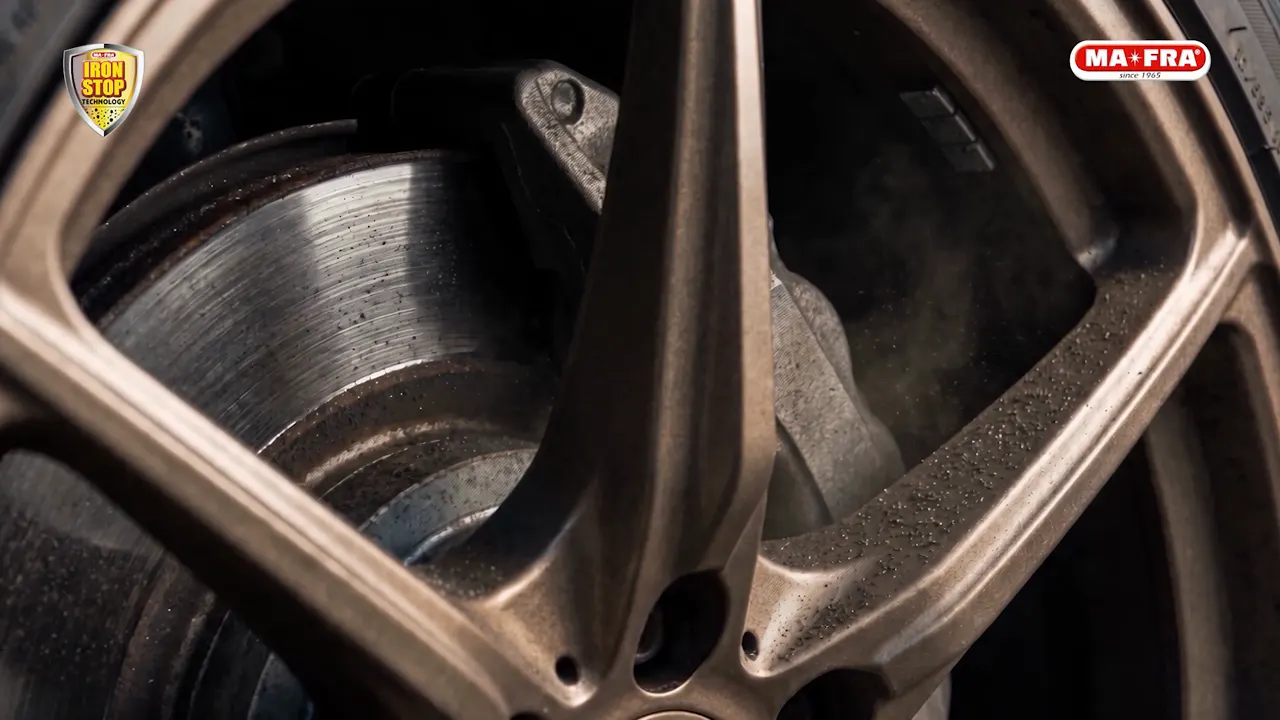
Brake dust
Every time a car brakes, discs and pads release ferrous dust that settles on wheels and bodywork. The lance removes it during the wash.
Mains water, pipes, storage tanks
Iron can also be present in the mains water and, in some cases, come from the site's storage tanks and pipework.
- 01Brakes, mains, siteiron enters the cycle
- 02Washingwater and surfactants bind dirt and particles
- 03Collection tankeverything flows in here
- 04Biological treatment planttreats the organic fraction
- 05Dischargewhere inspections take place
03 · The limit of the biological treatment plant
Enzymes digest organic dirt. Iron, they don't.
In the biological treatment plants most widely used in the car-wash sector, treatment relies on microorganisms and enzymes. They attack and digest the organic fraction in the water: surfactants and dirt residues.
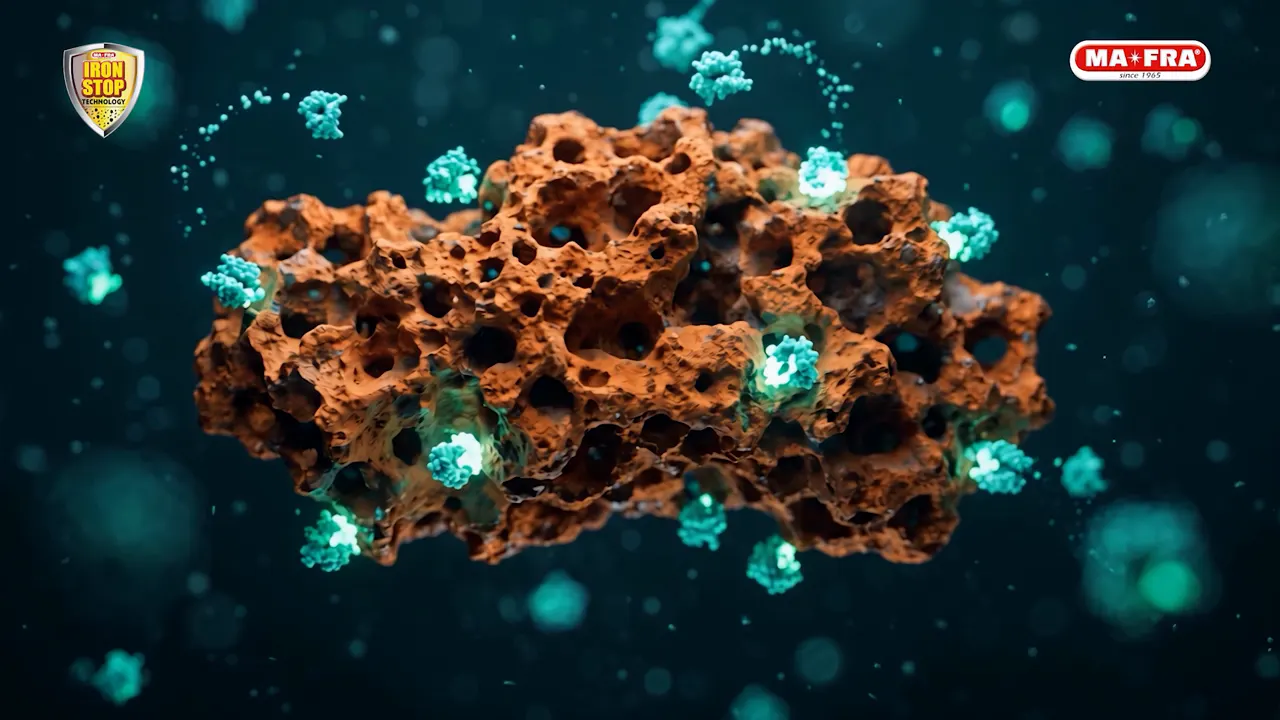
Iron particles, on the other hand, stay intact, pass through the plant in suspension and reach the discharge point. And that is where the analysis finds them.
Broken down
Surfactants and organic dirt
Stays in the water
Iron particles (Fe)
04 · How Iron Stop Technology works
It acts at the critical moment.
MA-FRA studied the phenomenon in its own laboratories and developed Iron Stop Technology: a technology that promotes the separation of iron from water, concentrating it in the sludge at the bottom of the tank.
When enzymes break down the surfactants, the iron particles are released. That is where Iron Stop steps in: it captures them, binds them and makes them heavier.
Iron in suspension
The released iron stays dispersed in the water and keeps following the flow towards the discharge point.
Iron settles into the sludge
Captured, bound and made heavier, the iron precipitates and settles in the sludge at the bottom of the tank, away from the flow towards the discharge.
- 01
Captures
It acts as soon as the enzymes release the iron from the surfactants.
- 02
Binds and weighs down
The bound particles become heavier and no longer stay in suspension.
- 03
Makes it settle
The iron settles in the sludge: less iron in the water bound for discharge.
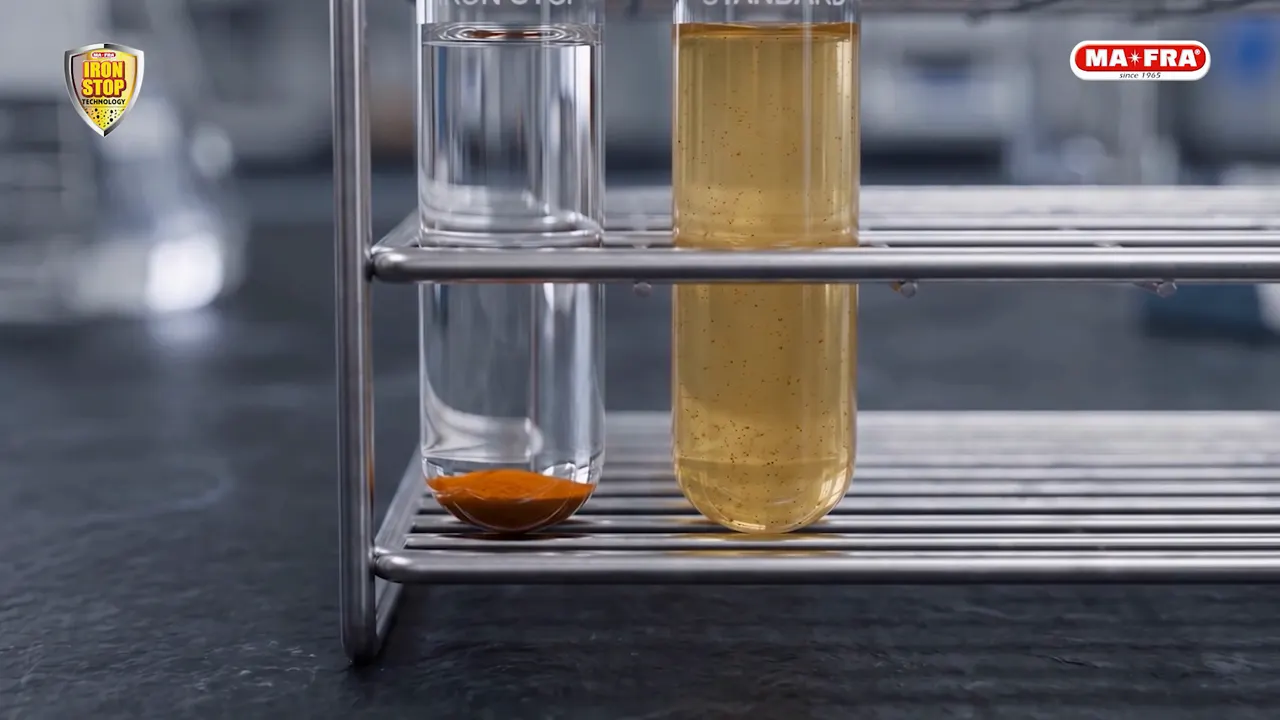
05 · The result is visible
Same amount of iron. A completely different result.
In the treated sample the iron forms a compact sediment at the bottom; in the conventional sample it stays dispersed in the water.
06 · Where the iron ends up
The iron doesn't disappear: it ends up where it should.
The sludge that builds up at the bottom of the tank, where the iron is now concentrated, is periodically removed and disposed of by authorised companies, in accordance with the rules on special waste.
A process every car wash already has in place: Iron Stop doesn't change it. It makes sure the iron ends up there, and not in the discharged wastewater.
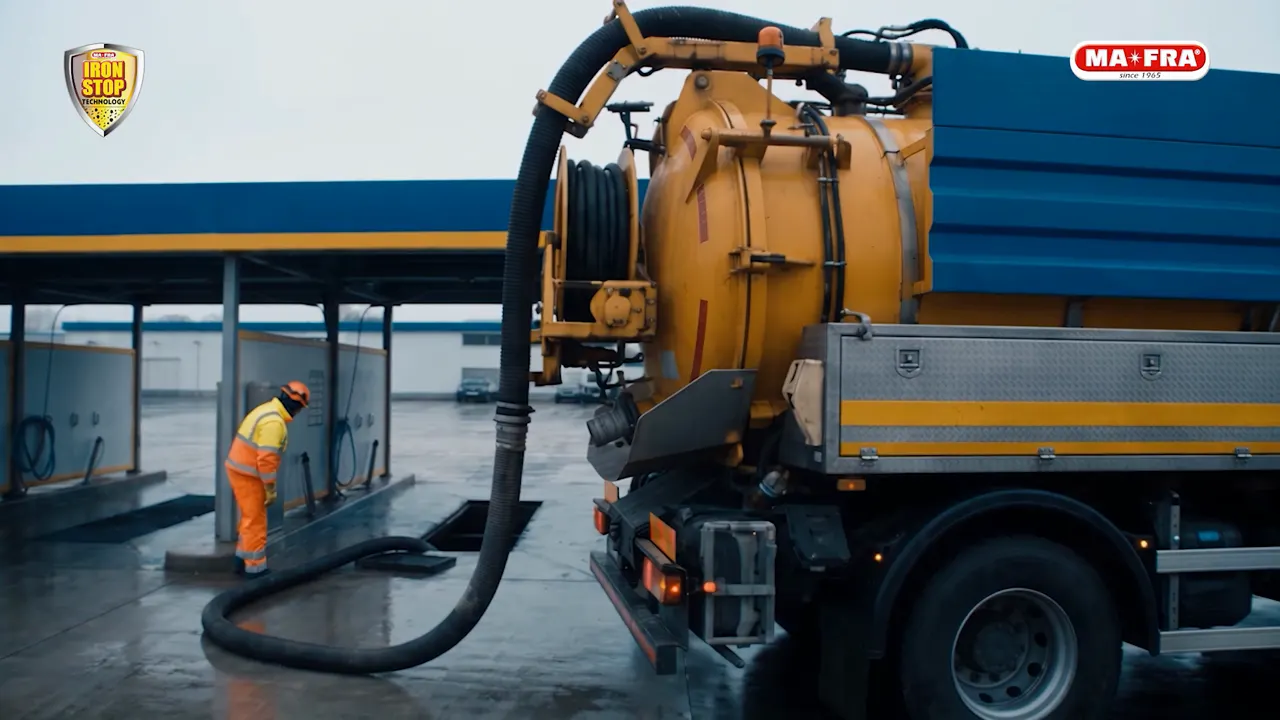
- 01Sludge in the tankthe iron is concentrated here
- 02Authorised collectionperiodic removal
- 03Disposalas special waste, in compliance with the rules
07 · Products with Iron Stop
Iron Stop is already in the professional products of MA-FRA.
The technology is built into prewash products and car-wash detergents: you use it every day in your normal wash cycle, without changing equipment or procedures.
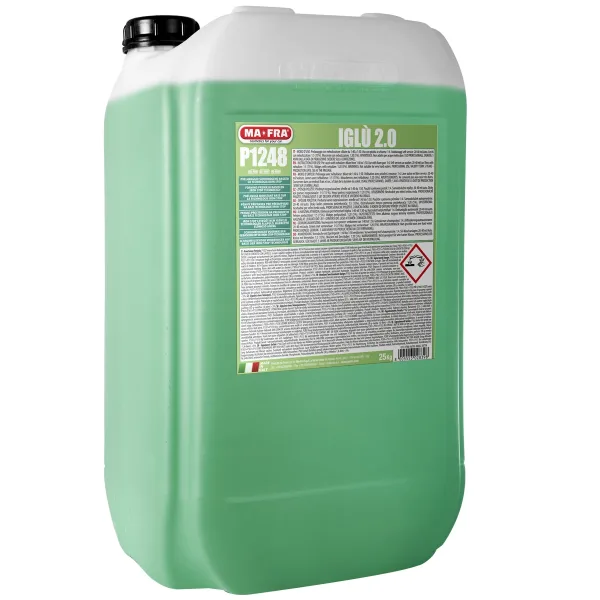
Iglù Foam Prewash
Multi-purpose foaming prewash: dense, clinging foam and excellent cleaning power at high dilutions.
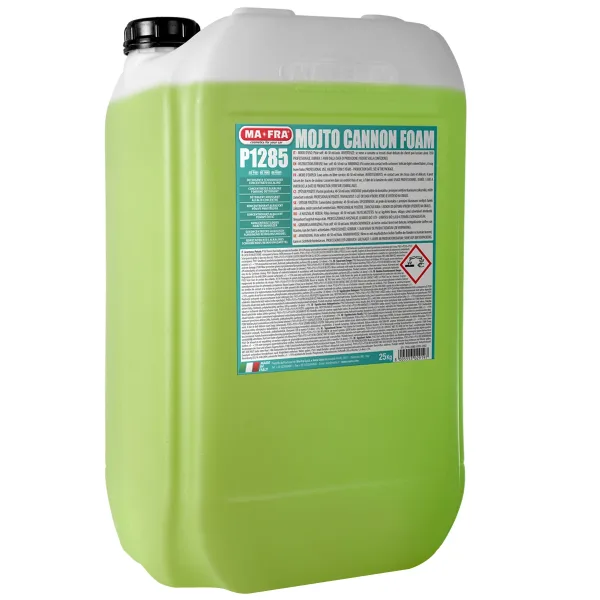
Mojito Cannon Foam
Concentrated, fragranced foaming prewash for self-service wash bays, with eye-catching coloured foam.
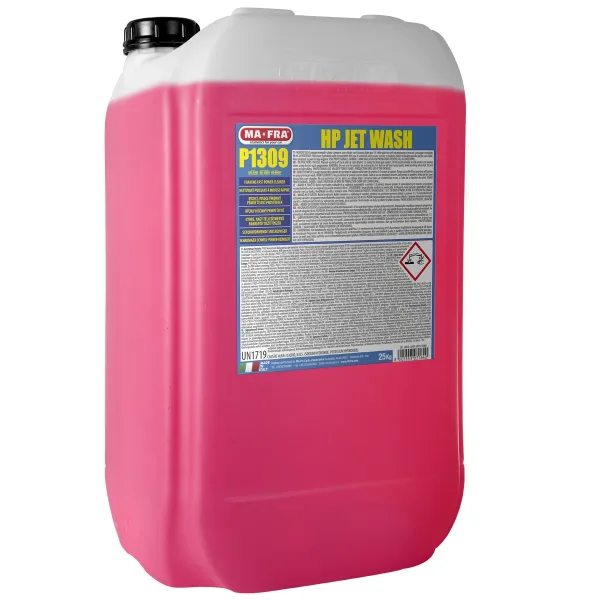
HP Jet Wash
High-foaming detergent for high-pressure self-service wash bays: removes traffic film, grease, smog and insects.
 Iron Stop is also one of the technologies of the Unika Line, the MA-FRA range for tunnel washes, roll-over gantries and self-service bays.
Discover the Unika Line →
08 · An important clarification
A practical tool. Not a miracle iron remover.
If a site has iron values far above the limits, no chemical product on its own can bring them back within the limits. Iron Stop is a tool for reducing iron in the discharged wastewater and improving water management.
Ordinary situation
Iron Stop acts on the iron concentration
In the most common cases, it is enough on its own.
Very high values
A technical inspection of the site is needed
Iron Stop is the smart first step before considering more substantial changes to the plant.
Frequently asked questions
Iron Stop in brief.
What is Iron Stop Technology?
It is a technology developed in the MA-FRA laboratories and built into some professional car-wash products. It promotes the separation of iron from water: it captures the iron when the treatment plant's enzymes release it from the surfactants and makes it precipitate into the sludge at the bottom of the tank.
Why doesn't the biological treatment plant retain iron?
Microorganisms and enzymes digest the organic fraction (surfactants and dirt residues), but they cannot digest iron. The particles stay intact, in suspension, and can reach the sampling manhole.
Where does the iron in car-wash wastewater come from?
The main source is brake dust deposited on wheels and bodywork. Iron can also come from the mains water and, in some cases, from the site's storage tanks and pipework.
Where does the captured iron end up?
In the sludge at the bottom of the tank, which is already periodically removed by authorised companies and disposed of in accordance with the rules on special waste. Iron Stop does not change this process.
Does Iron Stop guarantee compliance with the legal limits?
Iron Stop contributes to reducing the iron concentration in the water bound for discharge, and in the most common cases it is enough. With values far above the limits, no chemical product on its own can bring them back within the limits: a technical inspection of the site is needed, which your local dealer can help you set up.
Which products contain it?
Iglù Foam Prewash, Mojito Cannon Foam and HP Jet Wash from the MA-FRA professional car-wash range. It is also one of the technologies of the Unika Line.